When Bulk Screening Matters
Campus Recruitment Drives
University hiring events where hundreds of fresh graduates submit resumes for entry-level positions.
Corporate Hiring Campaigns
Large-scale recruitment initiatives when companies expand or launch new projects.
Seasonal Hiring Peaks
Periodic surges in hiring needs, such as fiscal year starts or project kickoffs.
The Challenges of High-Volume Screening
Time Pressure
Campus drives often require same-day shortlisting. Traditional screening methods can't keep up with the volume.
Inconsistent Evaluation
When multiple recruiters screen resumes, criteria vary. This leads to unfair comparisons between candidates.
Format Variations
Resumes come in different formats and structures, making standardized evaluation difficult.
Traditional Methods Don't Scale
Campus recruitment drives typically receive hundreds of resumes in a single day. A recruitment team might collect 300-500 resumes from a university hiring event, all needing evaluation before the next day's interviews. With traditional manual screening, this creates an impossible workload.
The math is stark: at 2-3 minutes per resume, screening 400 resumes takes 13-20 hours. That's before considering recruiter fatigue, which leads to inconsistent evaluation—candidates reviewed at 9 AM get more attention than those reviewed at 5 PM.
How AI Bulk Screening Works
AI-powered tools like Empikalyze take a different approach. Instead of reading each resume individually, you define your job requirements once, then upload all resumes in bulk. The AI analyzes each document against your criteria using semantic matching—understanding not just keywords, but the context and relevance of skills and experience.
Best Practices for Bulk Screening
Define Clear Requirements
Be specific about must-have vs. nice-to-have skills. Clearer requirements lead to better matching.
Standardize Collection
Use a common submission channel to gather all resumes in supported formats (PDF, DOCX, DOC, TXT).
Process in Batches
For very large drives, process resumes in batches of 100. This keeps the analysis manageable.
Review Top Candidates First
Start with highest-scored candidates. If they meet your needs, you may not need to review the entire list.
Document Your Criteria
Keep records of what you looked for. This helps justify decisions and improves future drives.
See Bulk Upload in Action
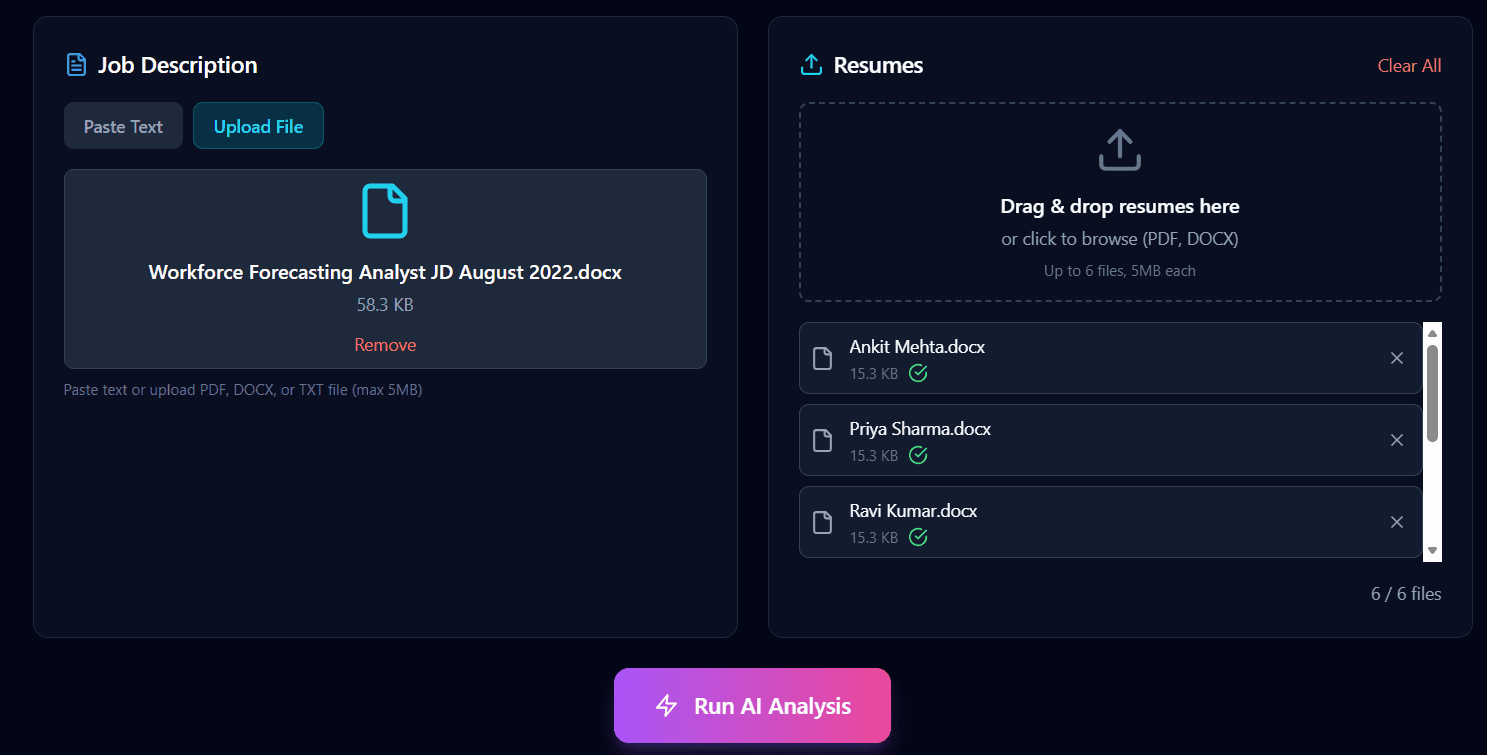
Upload Multiple Resumes at Once
Drag and drop up to 100 resumes per batch. The system accepts PDF, DOCX, DOC, and TXT formats—no need to standardize file types before uploading.
The Bulk Screening Workflow
Prepare Your Job Description
Document all requirements—skills, experience, qualifications. Be specific about what you're looking for.
Collect Resumes
Gather all candidate resumes from your campus drive or hiring campaign. Accept multiple formats.
Bulk Upload
Upload up to 100 resumes per batch. For larger drives, process in multiple batches.
AI Analysis
AI analyzes each resume against your requirements using semantic matching technology.
Review Ranked Candidates
Get a prioritized list with match scores. Review top candidates and proceed to interviews.
How AI Bulk Screening Helps
Bulk Upload Capability
Upload up to 100 resumes at once in PDF, DOCX, DOC, or TXT formats. Process entire folders without manual file-by-file handling.
Consistent AI Analysis
Every resume is evaluated against the same job requirements, ensuring fair and consistent candidate assessment.
Ranked Results
Get candidates sorted by match score. Focus your time interviewing the most promising applicants first.
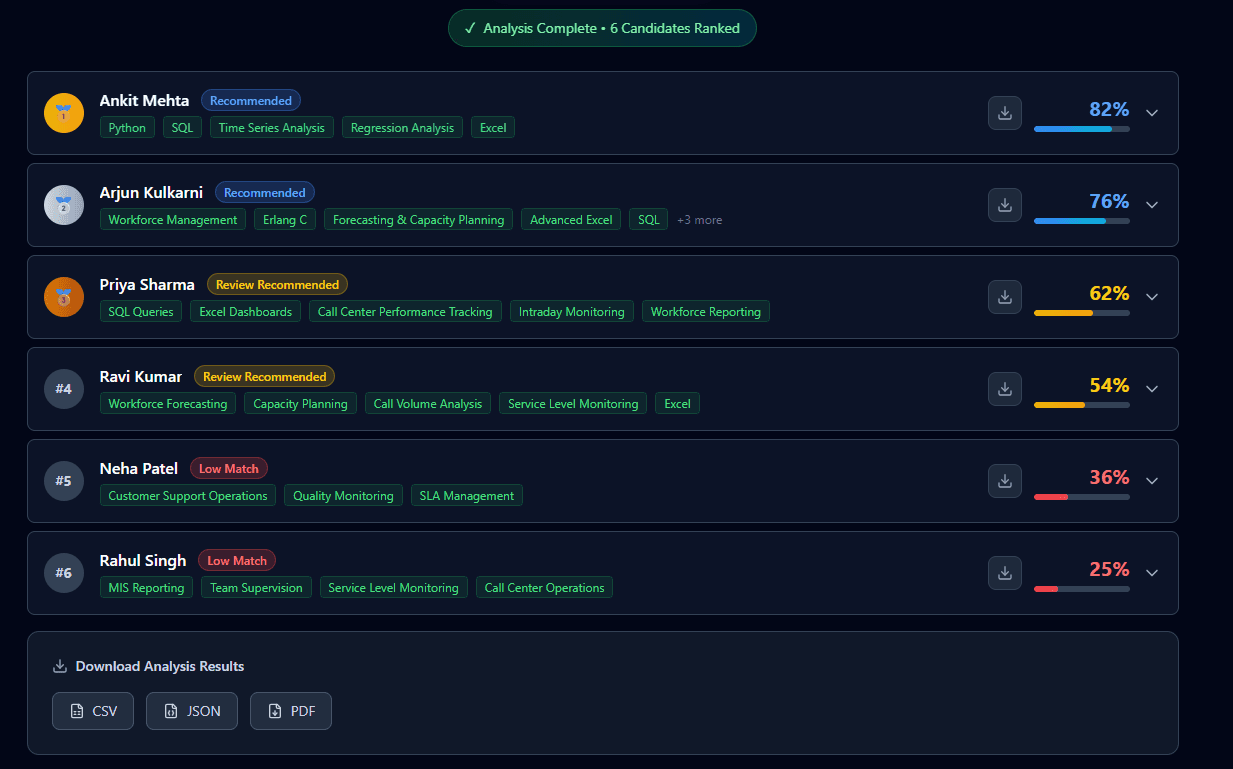
Ranked Results for Quick Decision Making
Candidates are automatically ranked by match score. Focus your time on the most promising applicants instead of reviewing resumes randomly.