The Problem with Keyword Filters
Traditional resume screening relies on exact keyword matches. If a candidate uses different terminology than your job description — writing "ML engineer" instead of "machine learning engineer" — they might be filtered out entirely, even if they are perfectly qualified.
In the Indian market, this problem is amplified. Candidates from different regions and education backgrounds describe the same skills in wildly different ways. A "data analyst" from a Tier-2 college might write "handled data in Excel and generated reports" while a candidate from a metro city writes "performed data analysis using Excel pivot tables and dashboards." Both have the same skill. Keyword filters treat them differently.
Semantic matching solves this by understanding the underlying capability, not just the specific words used. It is the difference between hiring based on vocabulary and hiring based on actual fit.
AI That Understands Context
Understands Context
AI analyzes the full context of experience, not just isolated keywords.
Finds Hidden Gems
Identifies strong candidates who use different terminology than your job description.
Precise Matching
Match scores based on actual skill relevance, not keyword frequency.
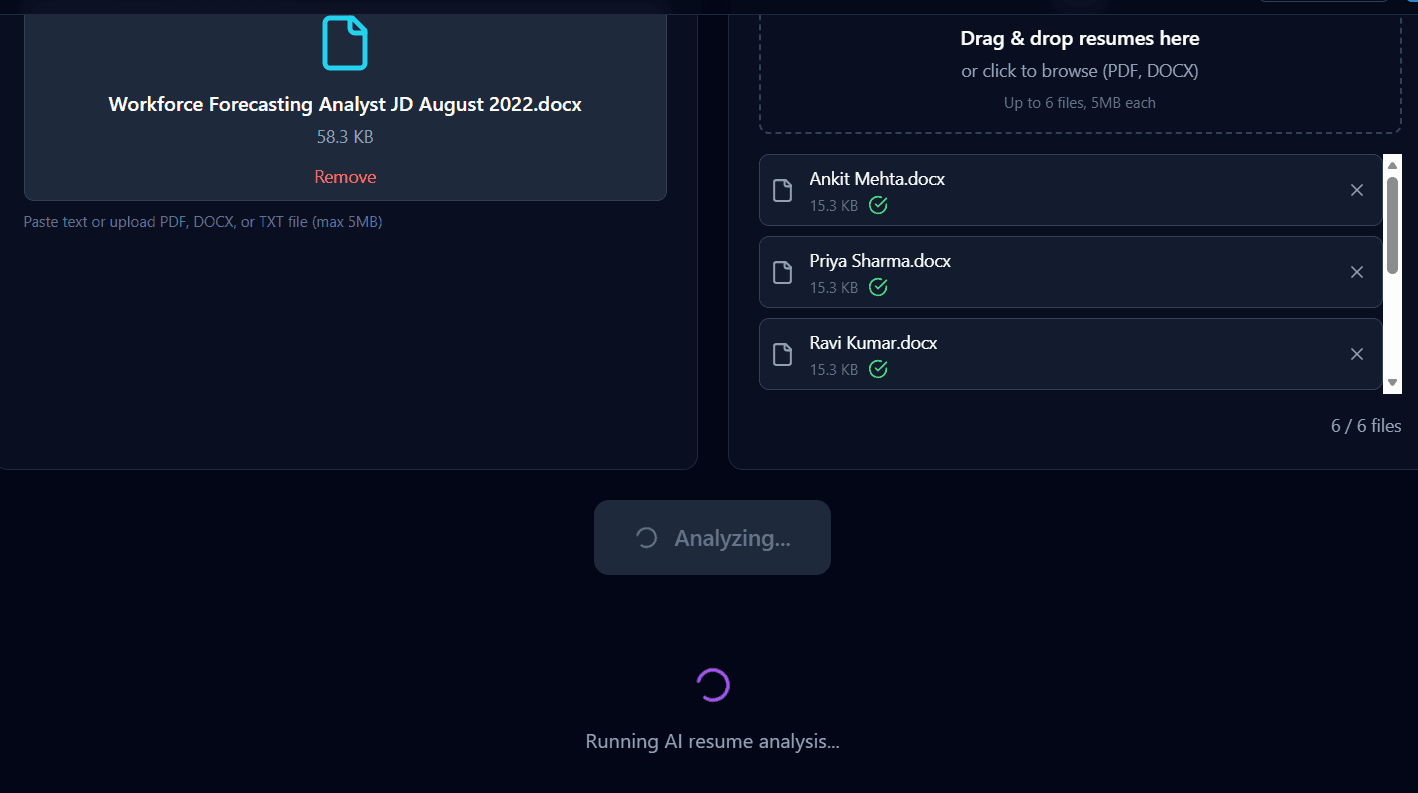
AI Analysis
Watch as AI extracts and analyzes key information from each resume.
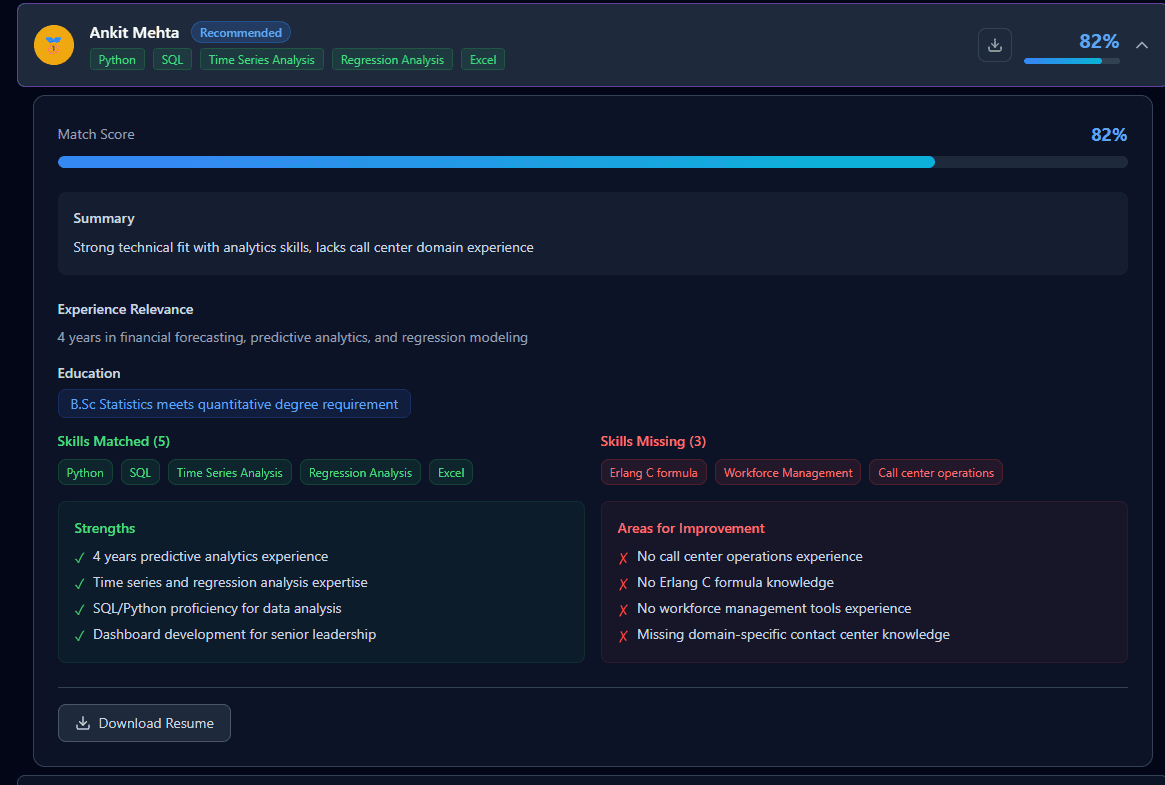
Match Insights
See detailed matching criteria and confidence indicators for each candidate.
How Semantic Matching Works
Job Description Analysis
AI extracts key requirements, skills, and context from your job description.
Resume Parsing
Each resume is analyzed to extract skills, experience, and qualifications.
Contextual Matching
AI compares job requirements against resume content using semantic understanding.
Ranked Results
Candidates are ranked by match score with confidence indicators.
Frequently Asked Questions
What is semantic resume matching?
Semantic matching uses natural language processing to understand the meaning behind words in resumes and job descriptions. Instead of simply matching keywords, it understands that 'React developer' and 'frontend engineer with React experience' describe the same skill set.
How is this different from keyword filtering?
Keyword filters only find exact word matches. If your job requires 'Python' and a candidate writes 'experience with Python programming', keyword filters might miss them. Semantic matching understands these are the same skill and matches accordingly.
Can I still specify required keywords?
Yes. After uploading your job description, you can add a custom message specifying traits or qualifications you're prioritizing. This guides the AI to focus on what matters most for your specific role.
How accurate is the semantic matching?
Our AI is trained on millions of data points to understand professional contexts. It continuously improves matching accuracy by learning from patterns in job descriptions and resume content. For Indian recruitment contexts, it has been specifically tuned to recognize variations in how candidates from different regions and education backgrounds describe similar experiences — ensuring a candidate from a Tier-2 city is not penalized for using different terminology than someone from a metro.